Difference of Fire Truck and Fire Engine
In daily life, we learn the words "fire truck" and "fire engine". Most people think they refer to the same type of truck. The name "fire truck" is often used to name fire trucks. Although both types of vehicles play an important role in firefighting missions, their duties, functions and equipment are different. Despite the clear functional differences between fire engine and fire truck, the terms are often used interchangeably in practical applications. For example, in some areas, it is customary to refer to all firefighting vehicles collectively as "fire truck", while in other areas, people prefer to use "fire engine" to refer to firefighting vehicles. The confusion stems mainly from the partial overlap in appearance and tasks. And now many fire trucks have more complete functions and configurations, and have more abilities, just like Isuzu fire trucks, which bring greater convenience to fire fighting. Below we will analyze the differences between "fire truck" and "fire engine" in detail.
1.Fire Engine
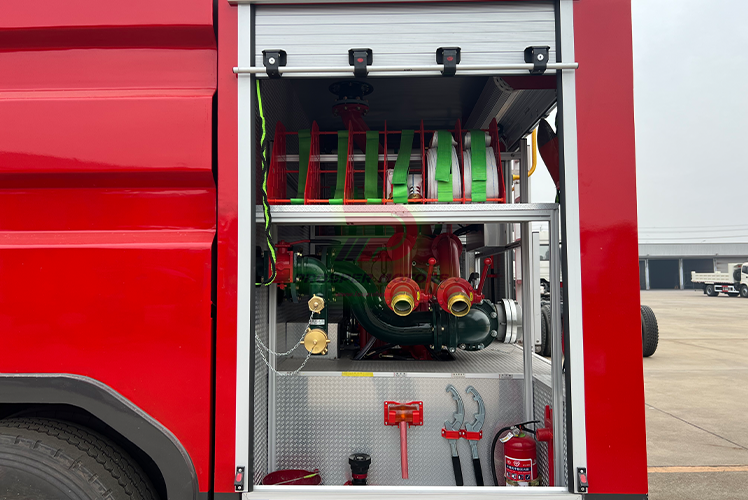
Fire engine, also known as a "Fire fighting vehicle" or "fire pumper", is one of the most basic and most commonly used vehicles in a fire department. Fire fighting is its main task. The Fire Engine is equipped with pumps, tanks, hoses, and other firefighting equipment that can help to draw water directly from a water source, such as a hydrant or a river or lake, and then extinguish the fire. In addition, Fire trucks, which are equipped with water or other extinguishing media at all times, are relatively smaller and lighter and usually arrive at the fire scene before the fire trucks to contain the fire as much as possible.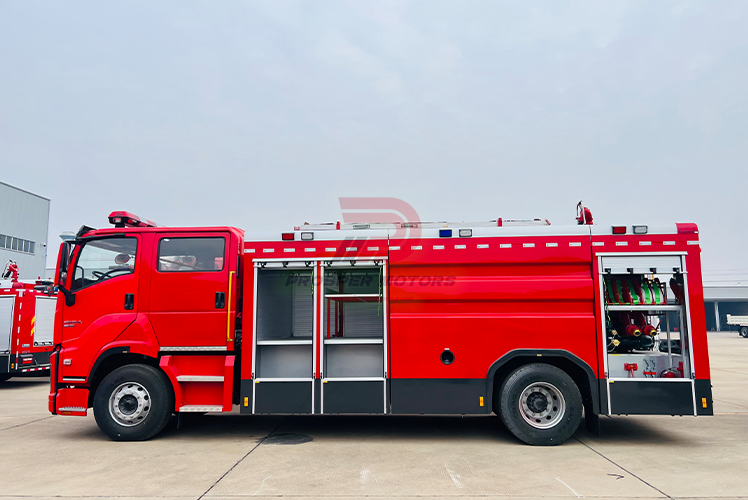
Origin and development
The Fire engine's approach to fighting fires dates back to ancient times. The earliest fire extinguishing equipment was the hand pump. With the development of science and technology, hand pumps have gradually evolved into modern fire trucks. At the end of the 19th century, steam-powered pumps were introduced, and fire engines were modernized.Appearance and structural
The Fire engine is typically a compact design. The rear of its body is equipped with pumps and water tanks of different capacities. Its appearance is more functional, with a striking red body and reflective strips and warning lights.Features
The first task of a fire engine is to put out a fire. It is usually equipped with the following main equipment:- Water pump: It is used to pump water from the fire source to the fire scene and increase the pressure to achieve the fire extinguishing effect.
- Water tank: carry a certain amount of water to extinguish the fire when it just starts.
- Hose: used to transport water or fire extinguishing agent. (e.g. foam, dry powder, etc.)
- Fire extinguishing agent: such as water, foam, dry powder, etc., for different types of fire, choose different fire extinguishing agent.
Usage scenarios
Fire engines are mainly used in below scenarios:- Building fire
- Forest fires
- Accident fires
- Other situations requiring quick fire suppression
2.Fire Truck
Qingling Fire trucks, also known as "ladder trucks" or "rescue trucks." It is a multi-purpose truck, mainly used in support and rescue missions. It is usually equipped with ladders, hydraulic tools, generators, lighting equipment, etc. It is mainly used in high-rise building rescue, car accident rescue or dangerous goods handling and other complex rescue. The main feature of the Fire truck is a huge, permanently attached ladder on top. That's why we call it a ladder truck.Origin and development
The Fire Truck came late to the game, largely in response to increasingly complex rescue missions. In the early 20th century, with the increasing speed of urbanization, the increasing number of high-rise buildings and traffic accidents, the Fire Truck gradually became an indispensable equipment for fire departments.Appearance and structural
The Fire truck is generally larger and longer than the Fire engine because it needs to carry more specialized rescue equipment. Its most obvious feature is that the roof is equipped with an aerial ladder or other large rescue equipment. The body design of the fire engine is more complex, in order to adapt to the needs of various rescue missions.Features
The first task of the fire engine is timely support and rescue. It is usually equipped with the following equipment:- Aerial ladder: used for high-rise building rescue or high-rise fire fighting work.
- Hydraulic tools: such as "hydraulic scissors, hydraulic pliers, hydraulic rescue rod, etc.", used for car accident rescue.
- Generators and lighting equipment: for rescue work at night or in dark environments.
- Respirators and protective equipment: for performing rescue missions in high-danger environments.
Usage scenarios
The Fire truck is mainly used in below scenarios:- High building rescue
- Accident scene rescue
- Handling hazardous material leakage accidents
- Natural disaster relief. (e.g. earthquake, flood)
3.When Do You Need a Fire Engine vs. a Fire Truck?
- If a building is on fire, but no one is injured, the Fire Engine can do the job well. Fire Engine and Firefighters will arrive at the scene much faster and then begin to extinguish the fire with their water tanks or connected water systems such as fire hydrants by using fire cannons.
- If there is a Fire and a victim is trapped or lost in the building, the Fire Truck can better help you rescue the trapped person. When people are lost or trapped, fire truck crews can rescue them via aerial ladders or enter buildings and use infrared cameras to find lost victims and bring them out.
- If a Fire gets out of control, you'll need both a Fire Engine and a Fire Truck. Fires are unpredictable, and if the Fire Engine does not subside, the Fire Truck will join in to put out the fire.
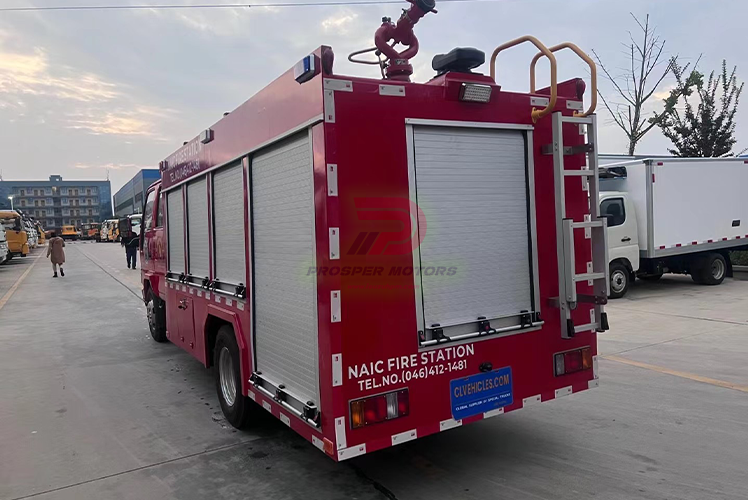
The Fire engine and fire truck are two of the most essential vehicles in the fire department, each performing its own role in fire fighting and rescue missions:
- Fire engine is focused on fighting fires with pumps, tanks and hoses for quick control.
- Fire truck is focused on rescue, equipped with aerial ladders, hydraulic tools and lighting for complex rescue scenarios.