Raw Milk Collection Truck Guide: Tank Design, Compartments and Farm-to-Plant Delivery
A raw milk collection truck needs to suit the way milk is gathered and delivered: how many farms are visited, how much milk is collected per trip, and whether separate batches need to remain apart. Tank capacity matters, but so do the tank’s insulation, compartments and cleaning arrangements.
The ISUZU QKR, FRR and FVZ models below illustrate three configurations, with tank volumes of 5m³, 8m³ and 10m³. Their features and intended applications differ, so the right fit depends on the collection route and handling requirements.
Start with the Collection Route
A route with a small number of nearby pickup points has different needs from one that gathers milk across multiple farms before delivery to a collection center or processing facility.
Consider the expected volume per trip, the number of stops, road access at pickup points and how the milk will be unloaded. If milk from different sources or collection batches needs to be kept separate, the tank’s compartment layout also matters.
These details help narrow down a suitable configuration more effectively than tank volume alone.
Tank Insulation and Temperature Management
Insulation and refrigeration are not the same. An insulated tank helps reduce temperature changes during transit; it does not actively cool the milk.
The QKR 5m³ model is described for small-scale collection and short-distance delivery. Its product information specifies a food-grade insulated tank and says it has no onboard refrigeration unit for short-haul missions. This makes the distinction important when planning routes: the vehicle’s insulation should not be treated as a substitute for an active cooling system.
When Do Separate Compartments Help?
A multi-compartment tank can keep collected loads in separate sections and support separate loading and unloading. This can be useful when a route includes multiple pickup points or when batches need to remain separated during transport.
The number and arrangement of compartments should match the actual collection process. More compartments are not automatically better if the route does not require batch separation.
Three ISUZU Milk Tank Truck Configurations
Model | Tank volume | Drive type | Configuration focus |
|---|---|---|---|
ISUZU QKR 4×2 | 5m³ | 4×2 | Light-duty configuration for small-scale, short-distance collection |
ISUZU FRR 4×2 | 8m³ | 4×2 | Food-grade stainless-steel tank with multiple compartments and insulated structure |
ISUZU FVZ 6×4 | 10m³ | 6×4 | Five-compartment layout for bulk milk collection and delivery |
ISUZU QKR 4×2 5m³: Compact, Short-Distance Collection
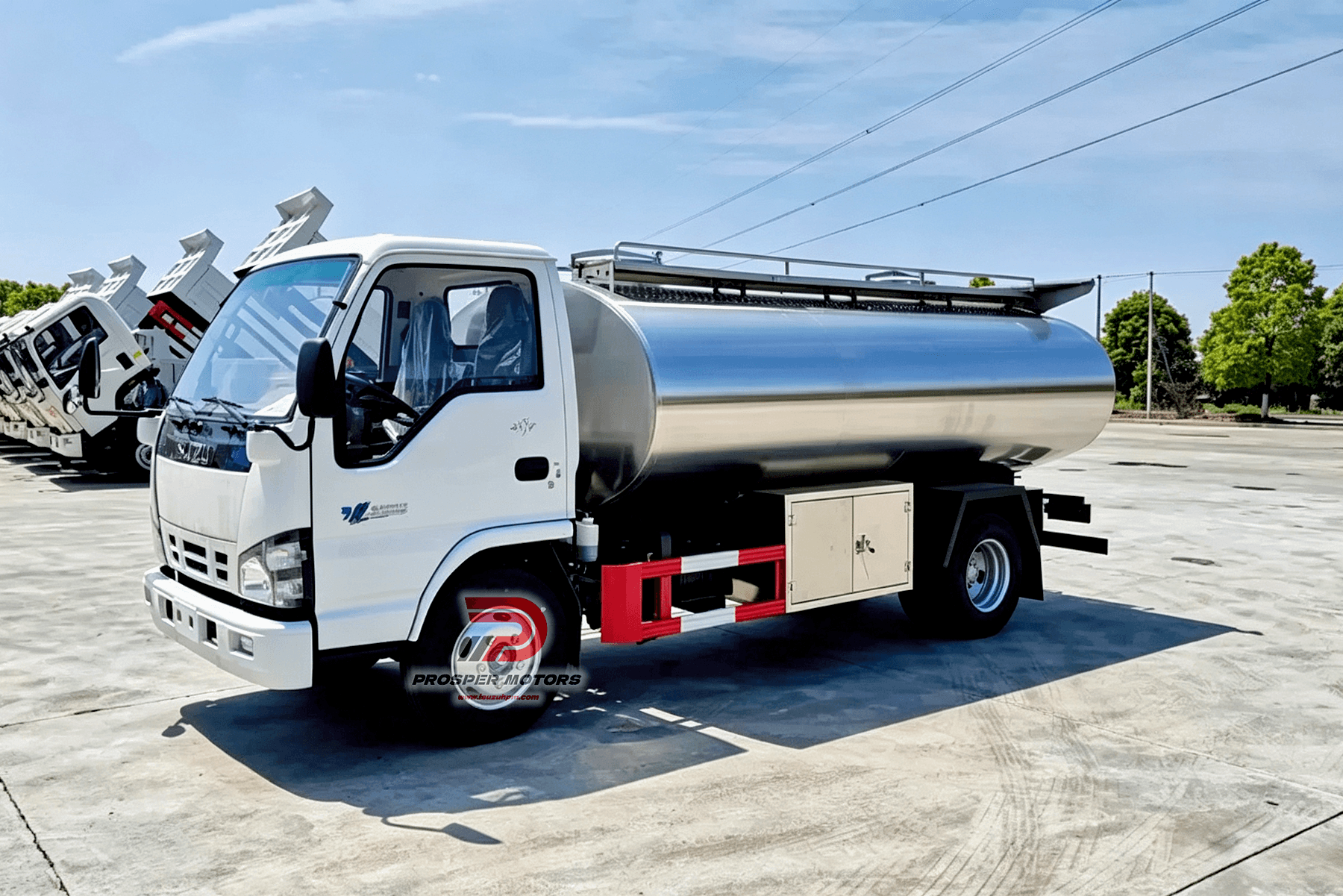
The QKR is positioned for small-scale milk collection and short-distance delivery. Its 5m³ food-grade insulated tank and 4×2 light-duty configuration are intended for routes that may include narrow rural farm roads and urban community delivery.
For operations where milk is collected in smaller volumes and delivered over shorter routes, this configuration provides a compact option. Its insulated tank helps limit temperature change in transit, but it does not include an onboard refrigeration unit.
View the ISUZU QKR 5m³ Raw Milk Collection Vehicle
ISUZU FRR 4×2 8m³: Multi-Compartment Collection

The FRR has an 8m³ food-grade stainless-steel tank with a multi-compartment design. It is described for fresh-milk transportation serving dairy farms and milk collection stations.
Its product description also details a stainless-steel valve and pipeline system, including inlet, outlet and cleaning valves, with CIP cleaning operations. These features are relevant for routes that involve separate batches and routine tank cleaning.
View the ISUZU FRR 8m³ Food-Grade Stainless Steel Milk Tank Truck
ISUZU FVZ 6×4 10m³: Five-Compartment Bulk Collection
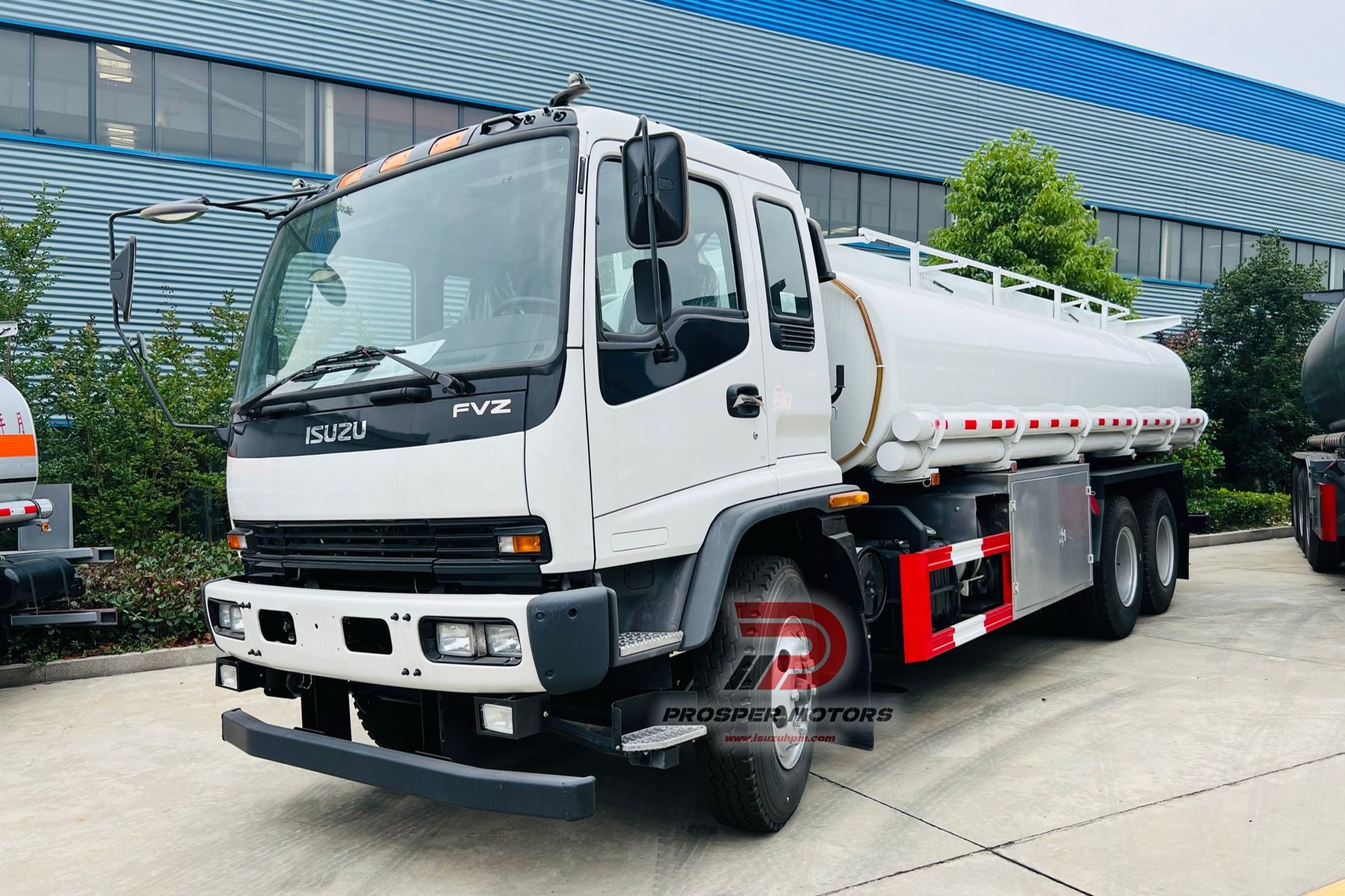
The FVZ is designed to transport bulk milk between dairy farms, collection centers and processing facilities. Its 10m³ tank has five separate compartments, each with an individual top manhole and corresponding valve control.
This layout supports separated collection and flexible delivery. The product description says a food-contact stainless-steel inner vessel and thermal insulation can be configured for dairy applications; these should be treated as configuration details, not assumed to be standard on every unit.
View the ISUZU FVZ 6×4 Multi-Compartment Milk Tanker Truck
Matching the Truck to the Operation
The three configurations serve different collection patterns:
QKR 5m³: a light-duty option for smaller collection volumes and short-distance routes.
FRR 8m³: a multi-compartment option for dairy-farm and collection-station operations where separate batches and cleaning arrangements are relevant.
FVZ 10m³: a five-compartment configuration for bulk collection and delivery between farms, collection centers and processing facilities.
When comparing them, consider the volume collected per trip, the number of pickup points, whether batches need to be separated, road access and the required cleaning process. The largest tank is not necessarily the best match if the route or collection pattern does not call for its capacity.
Frequently Asked Questions
1.Does an insulated milk tank actively refrigerate the milk?
No. Insulation helps reduce temperature changes during transit, while active refrigeration requires a cooling system. The QKR product description states that it has an insulated tank but no onboard refrigeration unit for short-haul missions.
2.What is the purpose of a multi-compartment milk tank?
Compartments allow milk to be carried in separate sections, with separate loading and unloading arrangements. The FRR has a multi-compartment design, while the FVZ product description specifies five compartments with individual top manholes and corresponding valve controls.
3.Which tank volume should I choose: 5m³, 8m³ or 10m³?
Base the decision on the volume collected per trip, the number of pickup points and whether batches need to remain separate. The QKR, FRR and FVZ examples offer 5m³, 8m³ and 10m³ tank volumes respectively, but capacity should be considered alongside the route and handling process.
Find a Configuration for Your Milk Collection Route
Whether your operation needs a compact truck for short-distance pickup, a multi-compartment tank for separate batches, or a larger configuration for bulk collection, the route and handling process should guide the choice.
Explore the ISUZU QKR 5m³, ISUZU FRR 8m³ and ISUZU FVZ 10m³ milk tank truck configurations, then contact the team to discuss the setup that fits your collection and delivery requirements.