How to Plan On-Site Fuel Delivery with an ISUZU NQR 5,000L Three-Compartment Truck
When a worksite needs both diesel and gasoline, delivery planning starts with the quantity of each fuel required at each location. The truck’s total tank capacity matters, but so does the capacity of each compartment. Matching the two can help teams plan what to load and which equipment to serve on each route.
1. Start with fuel demand
List the vehicles or machines that need refueling, the fuel each one uses, and the expected quantity at each stop. Then compare those quantities with the truck’s compartment layout.
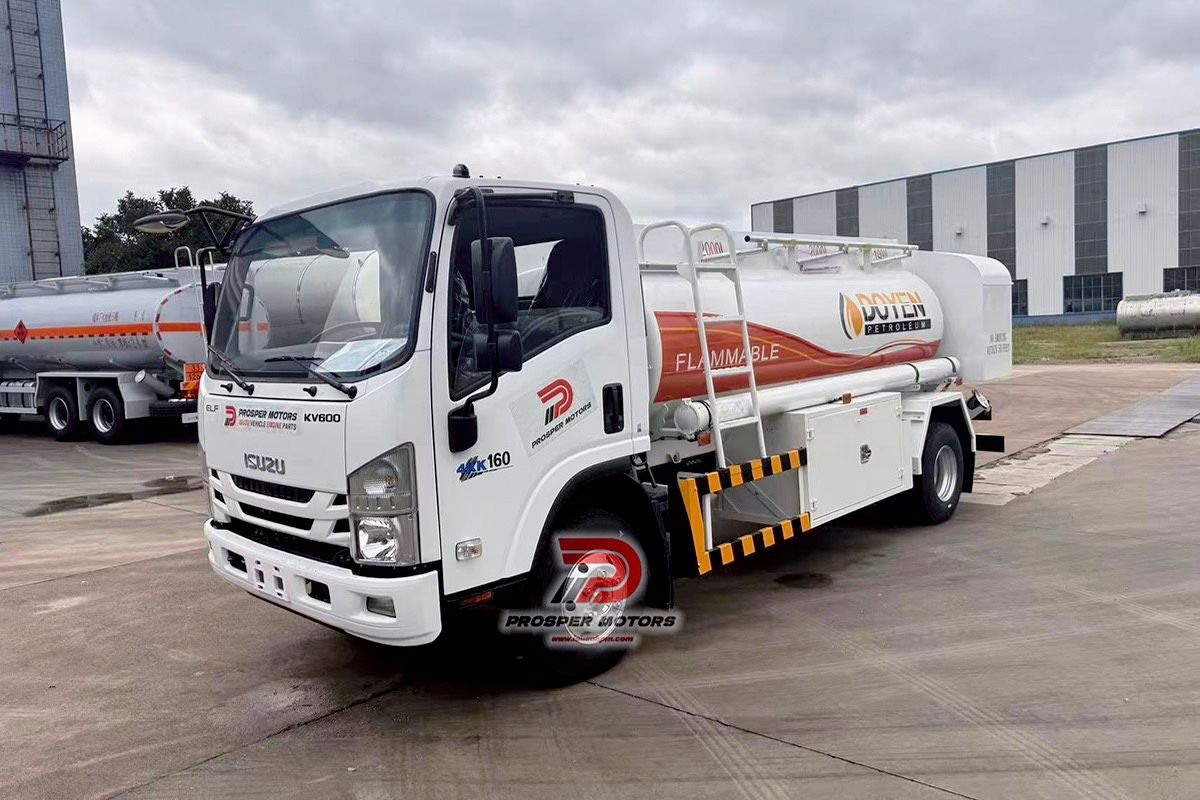
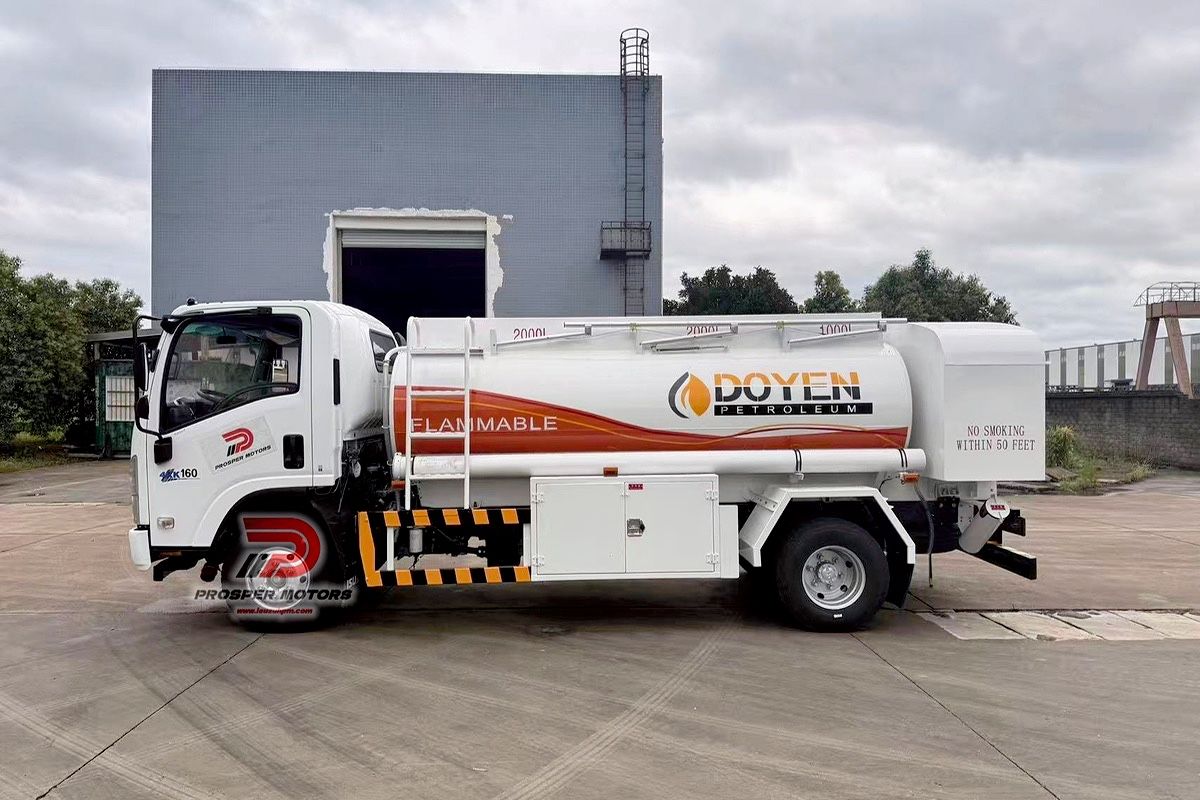
The ISUZU NQR fuel truck has a 5,000L tank divided into three compartments: 1,000L, 2,000L, and 2,000L. Each compartment can be filled with diesel or gasoline according to operating needs. Because the compartments have set capacities, plan for each section separately and check that the split matches the expected deliveries.
For example, a route with estimated demand for 1,800L of diesel and 2,700L of gasoline could allocate the diesel to a 2,000L compartment and divide the gasoline between the 1,000L and other 2,000L compartments. The load plan should account for the usable fill limits of each compartment and the fuel-transport requirements in the destination market.
2. Keep each fuel stream separate
Each compartment has its own filling port and pump outlet. Operators can select the relevant compartment for loading or dispensing. This arrangement helps keep fuel handling organized and reduces the risk of mixing different fuels.
Before dispatch, record the planned fuel type and quantity for each compartment. Confirm that the loading sequence, delivery sequence, and site procedures are compatible with the planned allocation.
3. Plan the dispensing routine
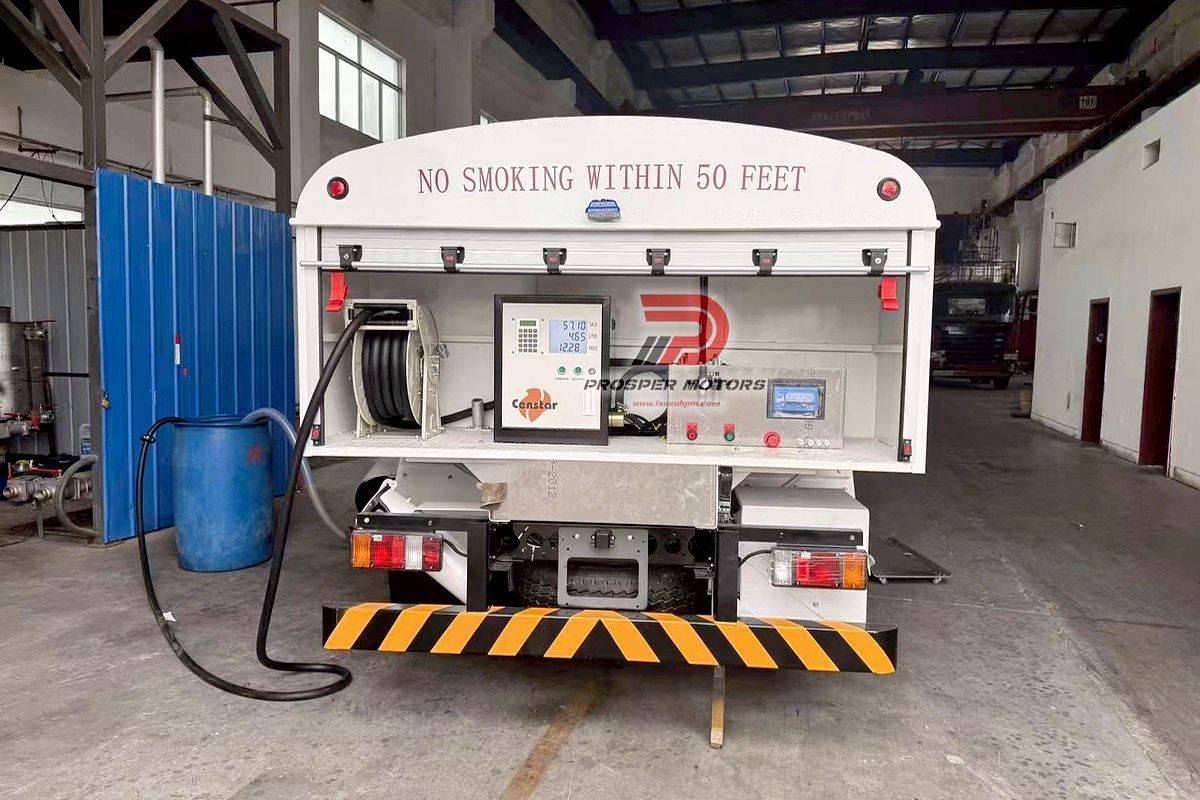
The truck is equipped with a fuel dispenser and an automatic rewind reel. The dispenser displays the amount delivered in real time, which can support delivery records and settlement. The reel stores the hose after use.
Check whether the hose can reach the equipment from a safe, accessible parking position. Include the required reach and site-access conditions when evaluating the vehicle configuration.
Fleets should also decide who authorizes each dispense, how meter readings are recorded, and how the delivered quantity is checked against the requested amount. These are operational planning steps and should be adapted to the fleet’s own procedures.
4. Check the vehicle configuration
Key specifications for this ISUZU NQR configuration are:
Tank capacity: 5,000L, divided into 1,000L + 2,000L + 2,000L compartments
Drive type: 4×2
Engine: ISUZU 4KK1, 160hp
Gross vehicle weight: 9,100kg
Wheelbase: 3,815mm
Transmission: MYY six-speed manual
The truck can supply fuel to construction-site machinery and agricultural equipment, support mobile refueling for vehicle fleets, and serve emergency-response and mining-site operations. Buyers should compare its specifications with their routes, payload needs, site access, and local operating requirements.
Safety equipment includes an electrostatic grounding coil, a fire extinguisher, and an overflow protection device. Requirements for fuel transport and dispensing vary by market, so confirm the rules that apply at the destination before ordering or operating the vehicle.
5.Questions to confirm before choosing a configuration
How much diesel and gasoline will be needed between replenishments?
Does the 1,000L and 2,000L compartment split fit the planned quantities?
Which vehicles or machines will be served, and where can the truck safely access them?
What hose reach and delivery records are required at each location?
Which local rules apply to fuel transport, storage, and dispensing?
The ISUZU NQR 5,000L three-compartment fuel truck combines separated fuel storage with onboard dispensing equipment. Comparing fuel demand with the capacity of each compartment is a practical first step in deciding whether this configuration fits the operation. Review the full specifications on the ISUZU NQR 5,000L three-compartment fuel truck product page. To discuss your delivery plan, contact Prosper Motors with your fuel types, expected volumes, routes, and dispensing requirements.